Growth Is a Shared Project
There's a version of real estate development that gets told as a solo story. A visionary developer spots an opportunity, assembles the capital, builds the thing, and the neighborhood transforms. Clean narrative. Good for a profile piece.
The reality is messier and, honestly, more interesting.
Development has almost never been a solo act. The projects that actually get built — and more importantly, the ones that endure — are almost always the result of relationships working in alignment. Municipalities and builders. Lenders and operators. Architects and community stakeholders. Private vision and public infrastructure. The deal at the table is usually just the visible tip of a much longer collaboration.
This has been true for as long as cities have existed.
When Frederick Law Olmsted and Calvert Vaux designed Central Park in the 1850s, they weren't working in isolation. The project required alignment between city government, private landowners, and a public that needed convincing. The Rockefeller Center development in Depression-era New York involved Columbia University as a landlord, multiple anchor tenants, and years of negotiation before a single foundation was poured. The suburban expansion of the postwar era — the Levittowns, the planned communities, the highway-adjacent retail corridors — happened because federal policy, private builders, and infrastructure investment all pointed in the same direction at the same time.
Scale requires collaboration. That's not a limitation. It's just how large things get built.
The nature of those partnerships has evolved over time. Public-private partnerships became more formalized in the latter half of the 20th century, with clearer frameworks for how municipalities and developers could share risk and benefit. Institutional investors entered the space and brought both capital and complexity. Community engagement processes — sometimes frustrating, always necessary — became a standard part of the entitlement journey.
What hasn't changed is the underlying dynamic. Development moves at the speed of trust.
When relationships between developers, cities, lenders, and communities are built carefully, projects move through obstacles more smoothly. Approvals come with less friction. Financing closes with more confidence. On-site teams inherit a project with goodwill behind it rather than skepticism.
When those relationships are transactional — when parties treat each other as obstacles to overcome rather than partners to work with — the friction compounds. Projects stall. Timelines stretch. Costs rise. And sometimes, a development that should have worked simply doesn't.
At Atrium, this is a philosophy we've carried from the beginning. Development isn't something we do to a community. It's something we try to do with it — alongside lenders who share our long-term view, municipalities where we've built credibility over time, and operators who understand what a finished project needs to perform well.
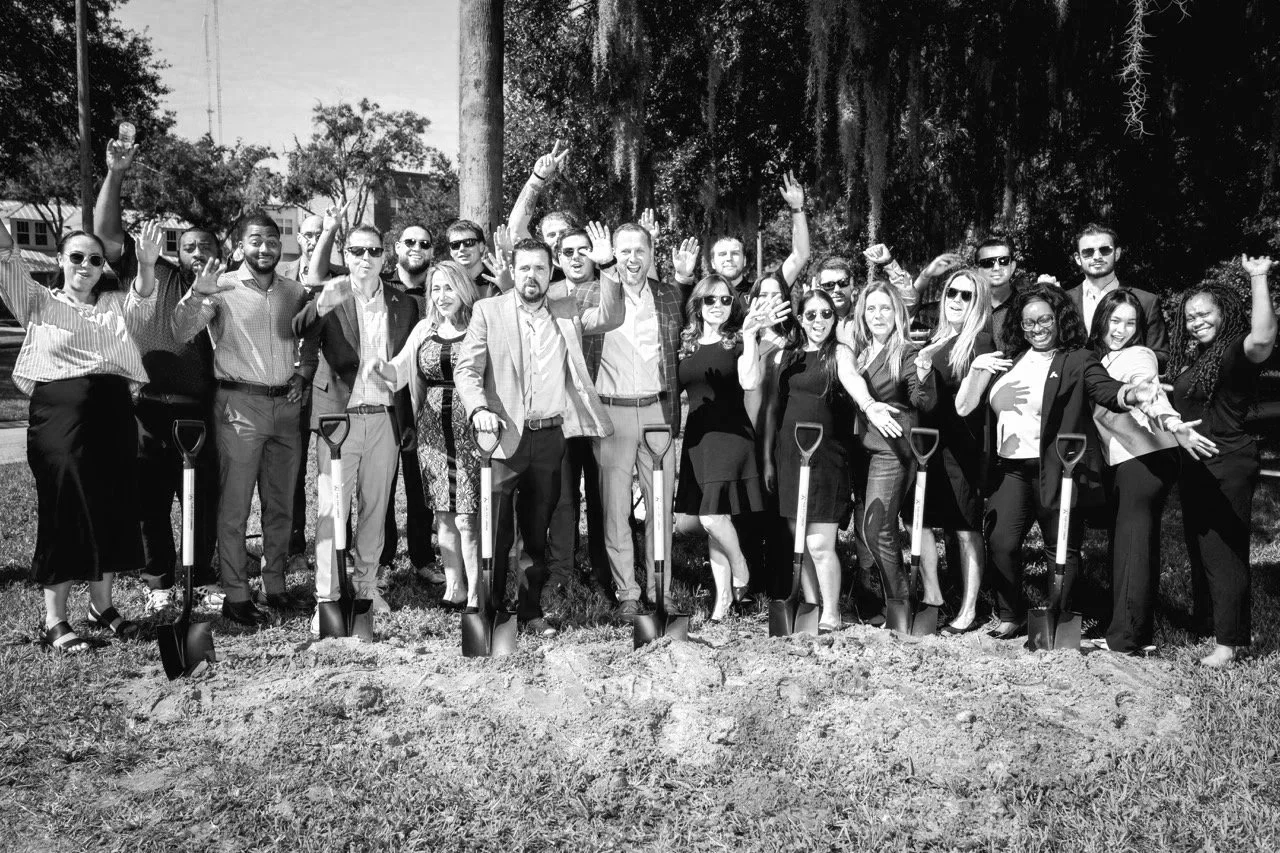
The groundbreaking is a moment. The partnership is what makes the moment possible.
Growth is always a shared project. The developers who understand that tend to build things that last.
Atrium Wordle #011
This week's real-estate-themed Wordle is live. Five letters, one word, worth the two minutes. Or however long it takes. Share your results on social with #atriumwordle.