The Migration Map: Why People Move and What It Means for Homeowners, Homebuyers, and Renters
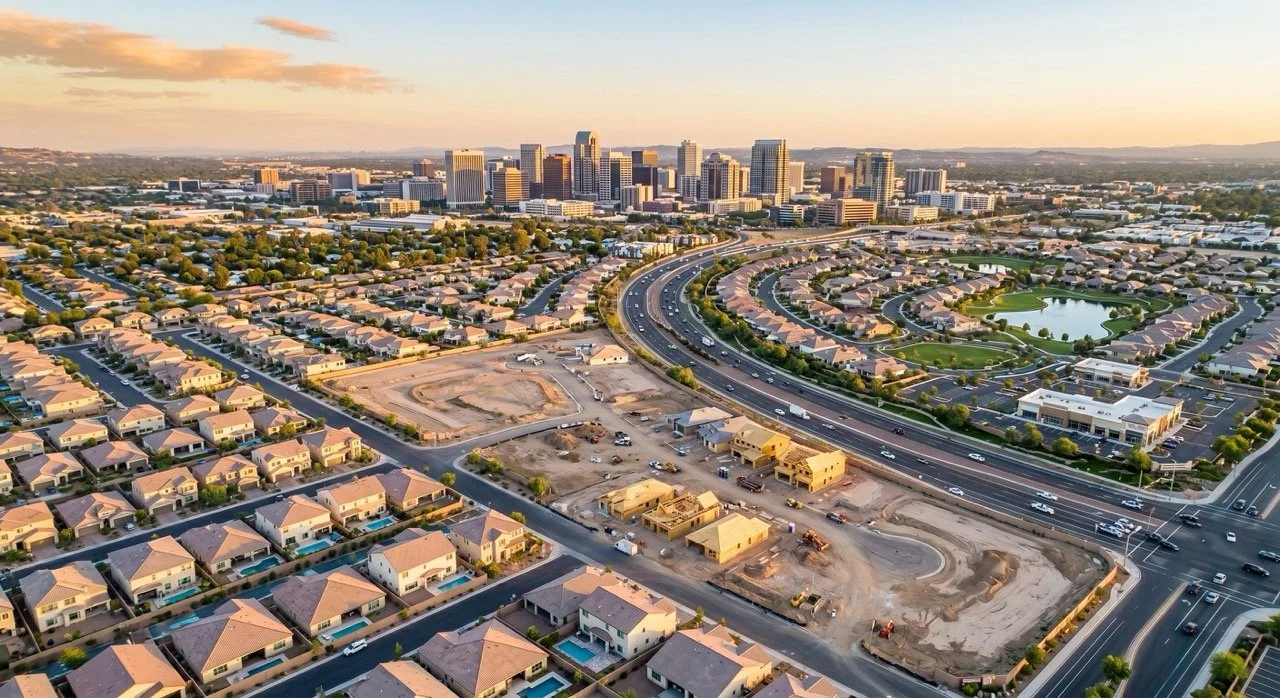
In 1862, the United States government passed the Homestead Act, offering 160 acres of public land to any citizen willing to settle it and work it for five years. Roughly 1.6 million people took the deal. The American West wasn't just settled by pioneers — it was settled by a federal migration incentive. And real estate values in those territories followed population within years of people arriving.
That's been the pattern ever since.
People move. Values follow. It's the most consistent long-run dynamic in residential real estate — more durable than interest rate cycles, more predictable than economic expansions, and more directly tied to long-term appreciation than almost any other variable. Understanding it is one of the most useful things a property owner or investor can do.
The Sunbelt Shift
The first great peacetime migration of the 20th century was powered by a piece of technology most people wouldn't think of as a real estate driver: air conditioning.
Before the 1940s, the American South and Southwest were genuinely difficult to inhabit in the summer. Oppressive heat limited economic productivity and made daily life uncomfortable for most of the year. Populations stayed concentrated in the North and Midwest, where climates were more temperate and industrial jobs were plentiful.
Residential air conditioning changed that equation. By the 1950s, homes in Florida, Arizona, and Texas could be kept comfortable year-round. The appeal was suddenly obvious. Retirees moved first — drawn by warmth, lower costs, and the promise of a different pace of life. Florida's population was around 2.8 million in 1950. By 1970, it had more than doubled to 6.8 million. By 1990, it was nearly 13 million.
Housing values in Sunbelt markets reflected this migration almost in real time. Land that had been agricultural or undeveloped became residential almost overnight in some corridors. Developers built as fast as they could. The pattern of migration → demand → construction → appreciation was visible, repeatable, and ultimately instructive for anyone paying attention.
The Rust Belt Divergence
While Sunbelt markets were climbing, something different was happening in the industrial Midwest and Northeast.
Through the 1970s and into the 1980s, manufacturing jobs began leaving cities like Detroit, Cleveland, Pittsburgh, and Buffalo. Automation eliminated some positions; global competition eliminated others; companies relocated to lower-cost regions or countries. Workers followed the jobs. Population in many Rust Belt cities didn't just slow — it reversed.
Detroit's population peaked around 1.8 million in 1950. By 2010, it had fallen below 714,000. The housing market told the same story in numbers. Properties that had been middle-class family homes became nearly worthless as demand evaporated and neighborhood stability collapsed.
The contrast with Sunbelt markets wasn't about the quality of the homes or the age of the buildings. It was entirely about where people were choosing to live — and why. Population inflow is the precondition for residential value appreciation. Population outflow is its opposite.
The 2020 Unlocking
Remote work created the largest voluntary migration event in modern American history.
Before 2020, most workers had to live within commuting distance of their jobs. That constraint kept expensive coastal metros densely populated and kept housing demand concentrated in a relatively small number of markets — San Francisco, New York, Boston, Seattle, Los Angeles. People complained about costs. Few could actually leave.
The pandemic decoupled work from location for a meaningful portion of the workforce. And within months, the migration signals were extraordinary. Boise saw home prices rise more than 40% in a single year. Nashville became one of the fastest-growing metros in the country. Tampa, Raleigh, Austin, Phoenix, and Scottsdale all saw demand spikes that overwhelmed available inventory.
Meanwhile, the population of San Francisco fell by roughly 7% between 2020 and 2023. New York City lost population for two consecutive years for the first time in decades. The migration was real, it was fast, and residential markets reflected it immediately.
What the Long View Shows
Across all of these episodes — the Homestead Era, the Sunbelt shift, the Rust Belt divergence, the pandemic migration — the underlying dynamic is consistent. People move for specific reasons: economic opportunity, climate, cost of living, quality of life, and family. The weights of those factors shift in different eras. But the behavior doesn't change.
Markets that attract people over long periods tend to appreciate over long periods. It's not a guarantee — boom-and-bust cycles happen within even the best long-run migration stories, as Florida's 2006-2009 collapse demonstrated. But population growth is the engine of demand, and demand is the engine of value. There is no long-term residential appreciation story without people choosing to move there.
For residential property owners and investors, this is the most important lens to apply when evaluating a market. Not: what are mortgage rates doing this quarter? But: who is moving here, where are they coming from, and why? Those questions, answered honestly, are more predictive of long-run value than almost any other data point you can find.
The Atrium Lens
We manage residential properties in markets that have benefited from population growth — and we've seen directly how migration shapes demand, lease rates, and property values over time. The owners who think in decades rather than quarters tend to be the most satisfied with their outcomes. They bought or held in markets with real population tailwinds, maintained their properties well, and let the long-run migration dynamic do its work.
That's not passive. It requires the discipline to choose good markets, the patience to hold through cycles, and the operational quality to keep properties competitive. But the underlying engine — the people who keep moving — does a lot of the heavy lifting for owners who position themselves correctly.
Atrium Management Company provides commercial brokerage, property management, and real estate development services. Learn more here.
Atrium Wordle #018
The very next Wordle is here. Five letters. Real estate themed, ish. Good luck. Share your results with #atriumwordle.