Why More Orlando Homeowners Are Renting Instead of Selling
2 min read • July 7, 2026
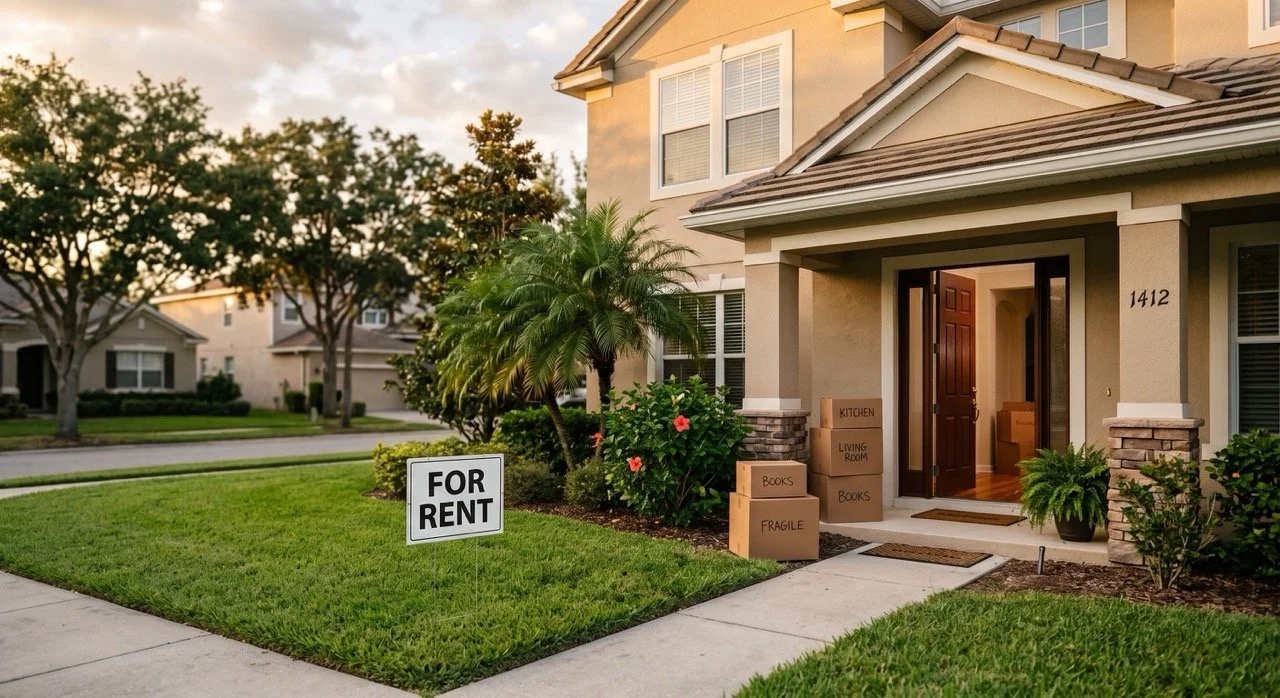
Nobody grows up wanting to be an accidental landlord. That's the whole point of the name.
The term describes someone who ends up renting out a property they never intended to hold onto. Maybe they inherited a house from a parent. Maybe they moved for a job and couldn't sell before the transfer date. Maybe the market softened right when they listed. Whatever the path, they didn't set out to be in the rental business. The rental business found them.
Right now, more people are finding themselves there than at almost any point in recent memory.
Zillow tracked this directly. In October 2025, 2.3% of the rental listings on its platform were homes that had been listed for sale within the previous three months, then pulled and re-listed as rentals instead. That's the highest share since late 2022, back when mortgage rates first crossed 7%. And the states leading that trend aren't spread evenly across the country. Texas and Florida account for seven of the top ten metro areas.
Why Florida specifically
Part of it is simple math. A homeowner who bought or refinanced at 3% doesn't want to trade that rate for something double it, even if their life circumstances changed. Selling means giving up the rate along with the house. Renting means keeping both.
Part of it is supply. Florida has added a lot of new construction over the past few years, which gives buyers more options and gives sellers less leverage. When a house sits longer than expected, renting starts to look less like a fallback and more like the better math.
And part of it is just the volume of people moving through Florida every year. Relocations, inheritances, life changes, they all happen constantly here, which means the raw number of potential accidental landlords is always higher than in a market where people stay put.
What this actually means if it's you
None of this requires you to become an expert in landlord-tenant law overnight, and it doesn't mean you made a bad decision by not selling. It means you now own an asset that needs a different kind of attention than the home you lived in.
Insurance changes. Maintenance requests don't wait for your schedule. Tenant screening isn't optional. And the difference between a property that pays for itself and one that quietly drains your bank account usually comes down to whether someone is actually managing it, or whether it's being handled in whatever spare time is left over after everything else.
That's the part of the story that doesn't show up in the Zillow data. The trend explains why so many people are renting instead of selling. What happens next is a separate question, and it's the one that actually determines whether this turns out to be a smart financial move or a slow-burning headache.
Thinking about whether to rent or sell? Talk to our team about what your specific numbers actually look like.
Atrium Management Company provides property management, commercial brokerage, and real estate development services. Learn more here.
Atrium Wordle #023
Today's word has everything to do with why so many homeowners are becoming landlords right now. See if you can solve it and make the connection. Share your results with #atriumwordle.