The Central Florida Apartment Market Is at Peak Friction — Here's What That Actually Means
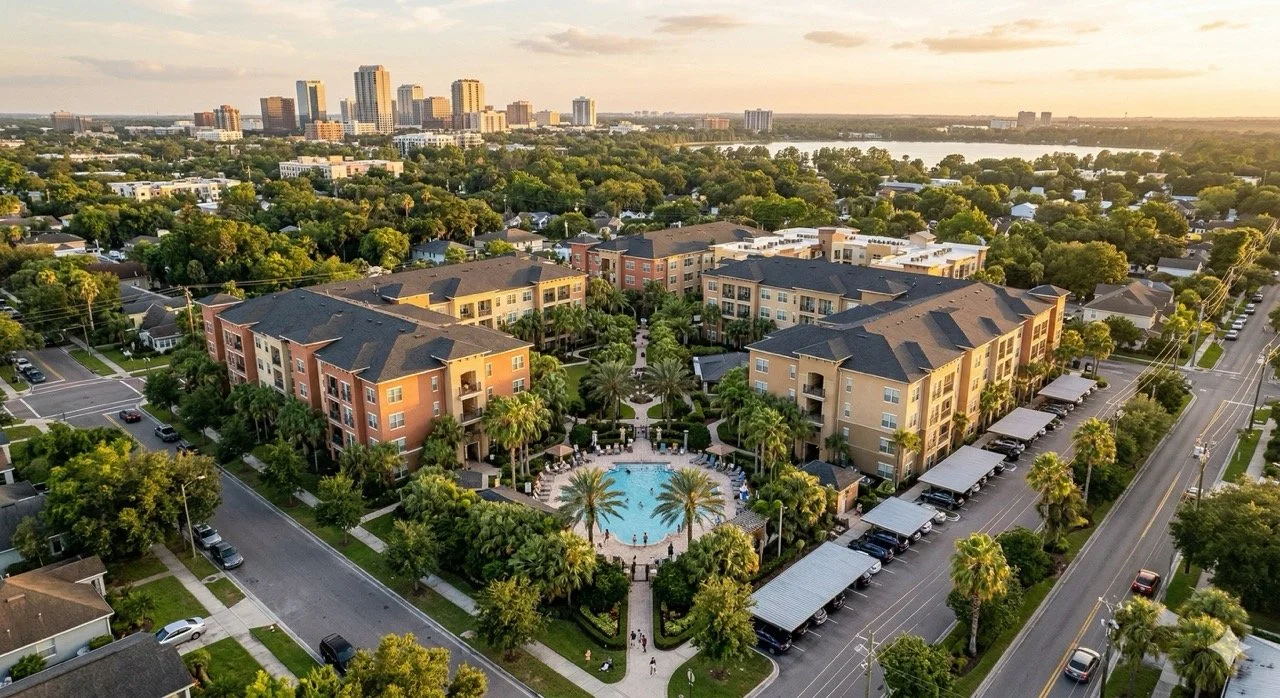
Vacancies are up, rents are down, and new construction has slowed sharply. If that sounds alarming, read a little closer.
Every market cycle has a moment where the headlines look the worst right before things start to turn. Central Florida's multifamily market may be living in one of those moments right now.
Orlando Business Journal recently published a deep look at where things stand — and it's a useful read for anyone with a stake in this market, whether you own a single apartment complex or you're evaluating your next acquisition. Adam Wonus, Atrium's co-founder and CEO, was among the industry voices the Journal turned to for perspective. That's not a small thing. OBJ doesn't quote people for filler.
Here's our take on what the data is actually telling us.
The Slowdown Is Real — and It Was Predictable
Multifamily deliveries in Central Florida declined nearly 10% over the past year. Units under construction are down roughly 35%. Construction starts have fallen by more than 40%. Those are significant numbers, and they reflect a market that overcorrected after the post-pandemic building surge.
The culprit isn't any single factor. Construction costs are still elevated. Interest rates have hovered around 6%, which makes new deals pencil out differently than they did when capital was cheap. The developers who broke ground three years ago were playing a completely different game than anyone starting from scratch today.
This is worth understanding because it sets the floor for what comes next.
Renters Are Winning Right Now. Owners Are Adjusting.
With vacancies above 10% in most Central Florida counties, landlords are offering concessions — discounts, free months, move-in specials — to attract tenants. Renters are responding by filtering up: moving from older properties to newer ones at similar or lower effective rent.
Atrium's Orlando multifamily portfolio — which skews toward older product — is sitting at 92% occupancy. That's a healthy number in this environment. But as Adam told OBJ, rental rates are down, and a real rebound isn't likely until the current wave of new supply gets absorbed. That's not spin. That's just how supply and demand works.
The Builders Still Active Are Sending a Signal
Here's the part that gets overlooked in the vacancy headlines: the developers still building right now aren't reckless. They're the ones who know this market well enough to play a longer game.
As Adam put it in the article: "It's mostly local developers who believe in the market that are building at this point."
That's a telling line. National capital has pulled back. Local operators — the ones who've seen this market through multiple cycles — are the ones still moving. They're not ignoring the headwinds. They're betting on what comes after them.
What the Numbers Don't Say
CoStar data shows negative rent growth has persisted for roughly three years in Central Florida. That sounds bleak. But it also means we may be closer to the bottom than most people realize.
Population growth continues. Job creation continues. The Avanath Capital acquisition of an East Orlando community for $73.5 million — announced in January — is a reminder that institutional buyers still view this market as one of the strongest in the country. That kind of conviction doesn't come from ignoring the data. It comes from reading it correctly.
The friction is real. The opportunity is also real. Those two things can both be true.
The Bottom Line
We're at what looks like peak vacancy and peak concessions. If Joe LaFleur of 100 Units is right — and his read on the cycle aligns closely with ours — stabilization is coming, with potential rent growth following by late next year.
The Orlando market has earned its reputation. The fundamentals that built it haven't disappeared. They're just waiting on the supply side to catch up.
Read the full Orlando Business Journal piece here — it's worth your time if you're tracking this market closely. (Note: article may require a subscription.)
If you want to talk through what this market moment means for your portfolio, we're always happy to have that conversation. Reach out to the Atrium team here.