Why Mixed-Use Development Is a Return, Not a Trend
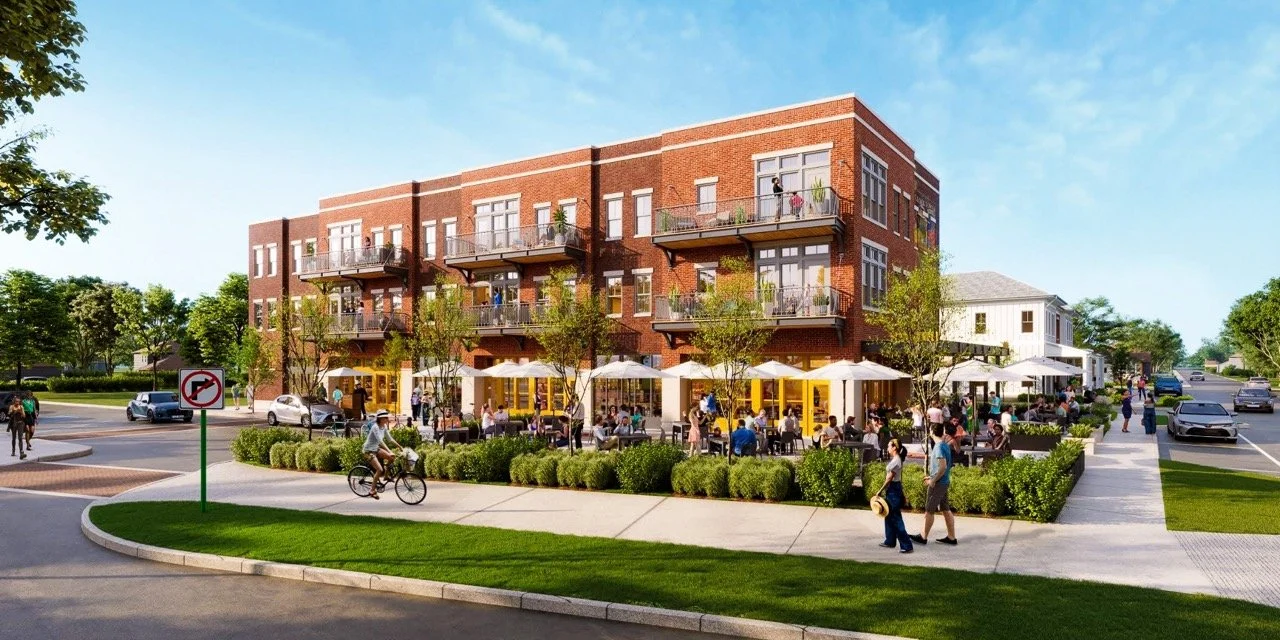
Mixed-use development gets talked about like it’s a modern innovation. New, forward-thinking, maybe even a little experimental.
It’s not.
In many ways, it’s a return to how cities naturally worked before we started separating everything into neat, single-purpose zones. Go back far enough and you’ll find neighborhoods where life wasn’t divided into “residential,” “commercial,” and “office.” It all lived together. Apartments above storefronts. Offices next to cafés. Grocers, tailors, and restaurants all within a short walk.
Daily life didn’t require planning — it just happened.
Then, over time, zoning laws and suburban expansion began to pull those uses apart. There were good reasons for it. Industrial activity needed separation. Infrastructure scaled. Cities grew quickly and needed structure. But in solving those problems, we created new ones—longer commutes, less walkability, and a kind of fragmentation in how people experienced place.
That’s where mixed-use development re-enters the conversation. Not as a trend, but as a correction.
The most successful mixed-use projects today don’t try to manufacture energy.
They don’t force synergy between uses that don’t belong together. Instead, they’re designed to support natural human patterns — how people move, gather, work, and unwind throughout the day.
Morning coffee becomes a short walk downstairs. Work happens nearby. Dinner doesn’t require a drive across town. Over time, those small conveniences add up to something bigger: connection.
And connection is what gives a place staying power.
From a development standpoint, mixed-use also introduces a level of resilience that single-use projects often lack. When residential, retail, and office uses are thoughtfully integrated, the property isn’t relying on a single economic driver. It has multiple streams of activity, multiple rhythms throughout the day, and multiple ways to remain relevant as markets shift. That doesn’t happen automatically, though.
Mixed-use works best when it’s grounded in context.
The surrounding neighborhood matters. The scale matters. The tenant mix matters. If those pieces are out of alignment, the project can feel disjointed instead of seamless.
But when it’s done well, something interesting happens. The development stops feeling like a project and starts feeling like a place.
People linger. They return. They build routines.
At Atrium, we think about mixed-use through that long-term lens. Not as a box to check, but as a way to create environments that evolve with the people using them. The goal isn’t just to combine uses — it’s to make them work together in a way that feels intuitive.
Because at the end of the day, the best ideas in real estate aren’t always the newest ones.
Sometimes, they’re the ones we’ve rediscovered.
Atrium Wordle #007
The latest Atrium Wordle is live. Five letters. One industry term. Slightly trickier than last week. Let us know how you do! Share your results with #atriumwordle.